Mathematical Science and Physics Course, Faculty of Science and Engineering, Iwate University
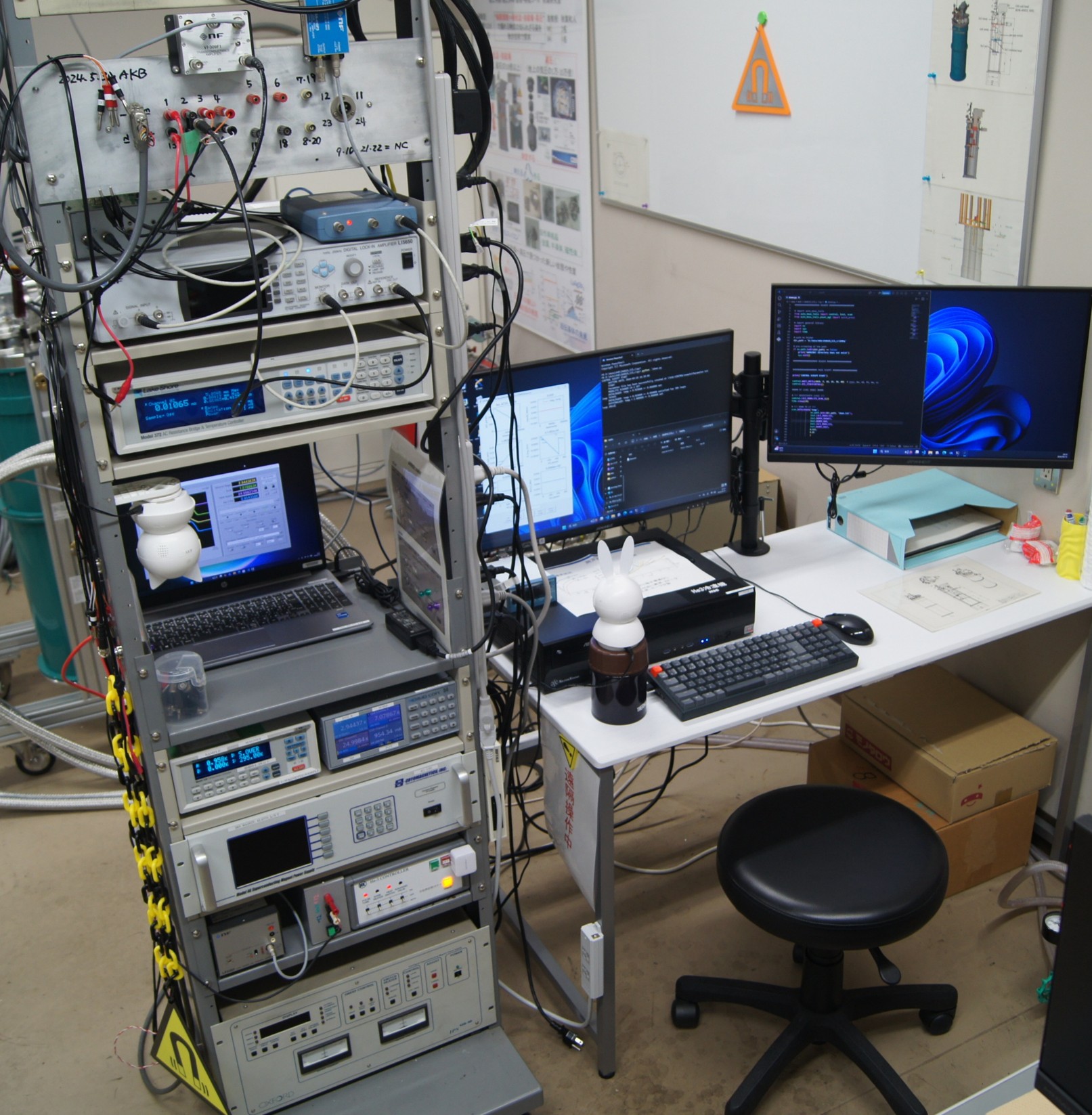
Achieves a base temperature of 300 mK without using liquid cryogens such as helium or nitrogen. Equipped with a cryogen-free superconducting magnet, it can generate magnetic fields up to 9 T. By preparing Python scripts that describe the measurement sequence, the whole process — from powering on the refrigerator through temperature control, magnet energization, and shutdown — can be fully automated. Remote desktop tools also allow the system to be operated and monitored from outside the laboratory.
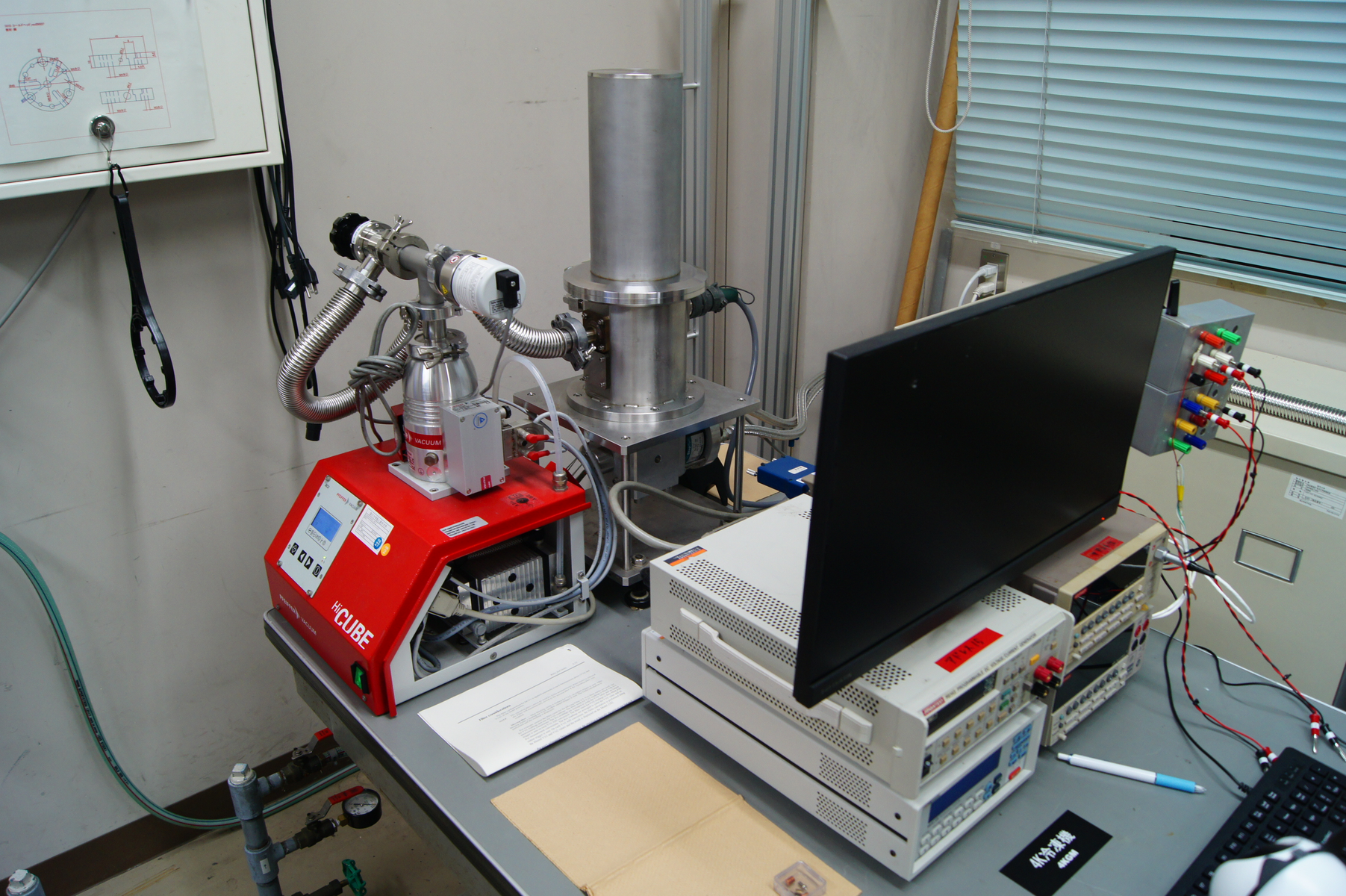
Achieves a base temperature of 4 K without using liquid cryogens such as helium or nitrogen. It allows measurements at zero magnetic field and ambient pressure to be performed easily. Fully automated measurement is possible using the same Python scripts as the 3He refrigerator.
Generates up to 9 T when cooled with liquid helium (up to 11 T when used with a lambda-point refrigerator). Temperature can be controlled from 1.5 K to 300 K using a variable temperature insert (VTI).
Pressure is generated by pressing a tungsten carbide indenter into a NiCrAl alloy cavity filled with liquid medium. The standard sample space is about 1 mm in diameter, with a maximum pressure of approximately 4 GPa. Combined with a custom magnetic field rotation mechanism, it enables measurement of physical quantities' magnetic field directional dependence under pressure.
Pressure is generated by compressing a metal gasket with a central hole filled with liquid medium between two tungsten carbide anvils. The standard sample space is about 2.5 mm in diameter, and the maximum pressure reaches about 10 GPa. This cell balances a relatively large sample space with high attainable pressure.
Pressure is applied by compressing a Teflon capsule filled and sealed with liquid medium. Cells with cylinder inner diameters of 4, 5, and 6 mm are available, with a maximum pressure of about 3 GPa. Allows a variety of measurements utilizing the wide sample space.
Pressure is generated by compressing a metal gasket with a central hole filled with liquid or soft solid medium between two diamonds. Maximum pressure exceeds 10 GPa. We plan to set up and use this equipment for measurements in our lab in the near future.
Examples of the instruments used for various measurements.
A homemade cluster computer with a total of 64 cores assembled from commercial parts. Used for first-principles calculations (Quantum ESPRESSO) and other small- to medium-scale numerical computations.
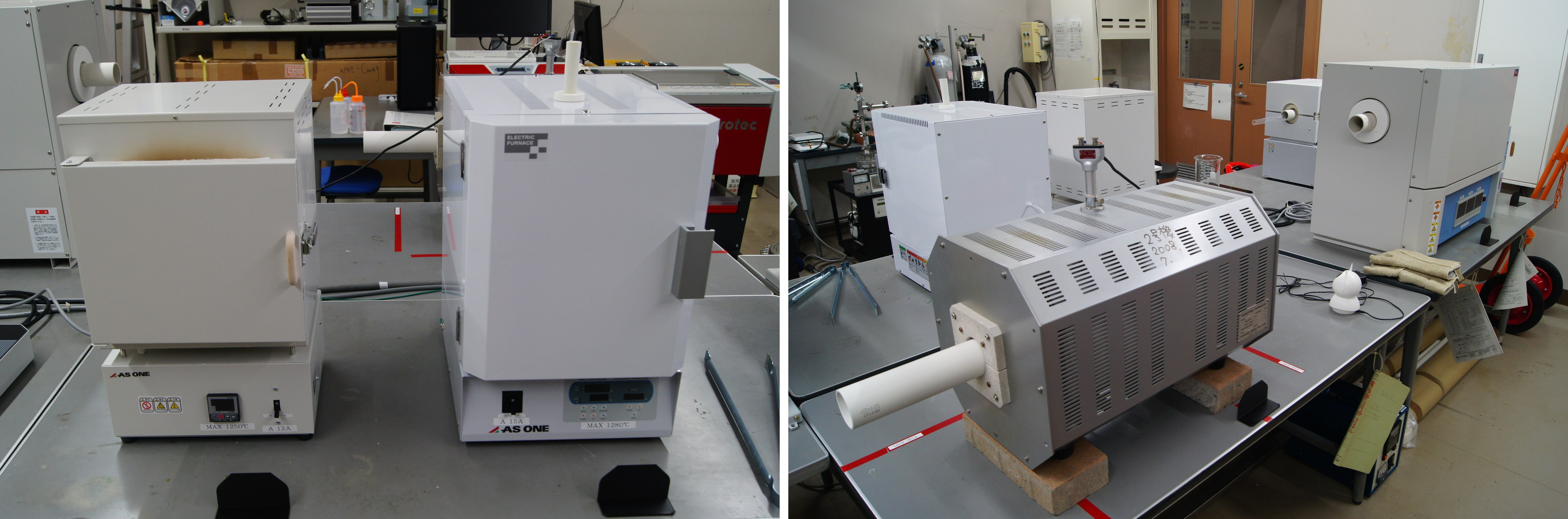
Three box furnaces and three tube furnaces are available. They enable sample synthesis by the flux method, chemical vapor transport, and other techniques.
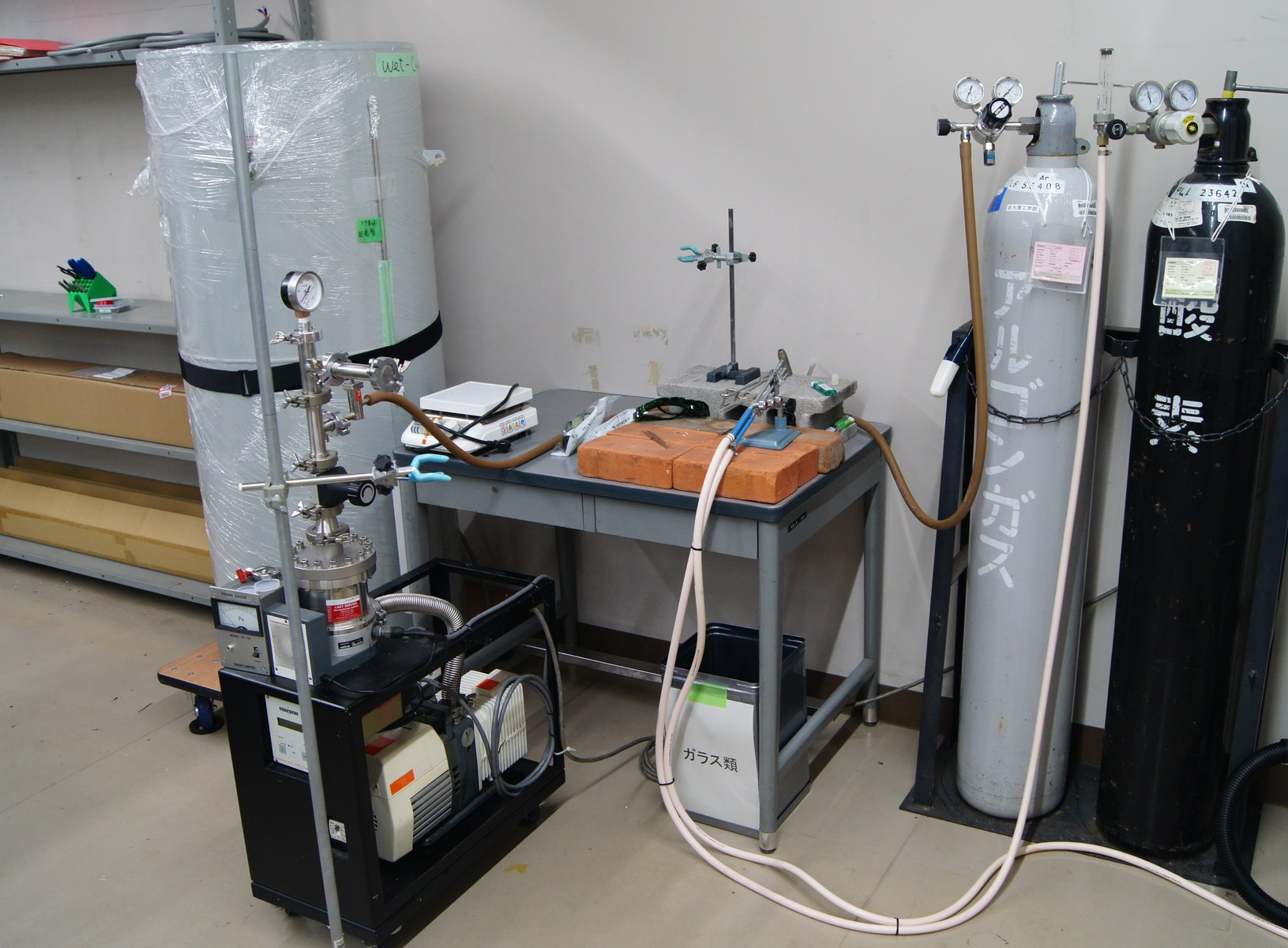
Using a hand torch fueled by city gas and oxygen together with a vacuum pump, starting materials can be sealed in quartz tubes under vacuum or in an argon atmosphere.
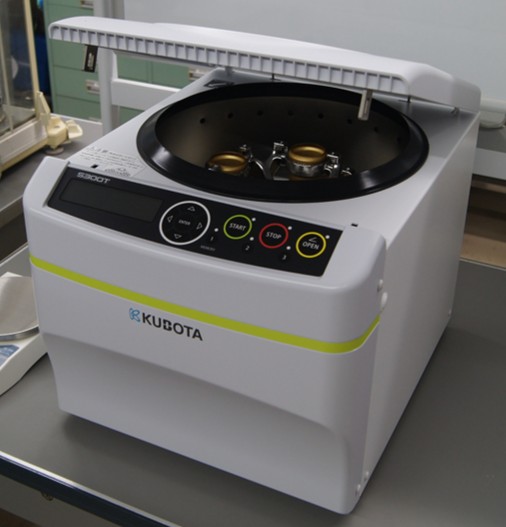
Used to separate crystals from flux.
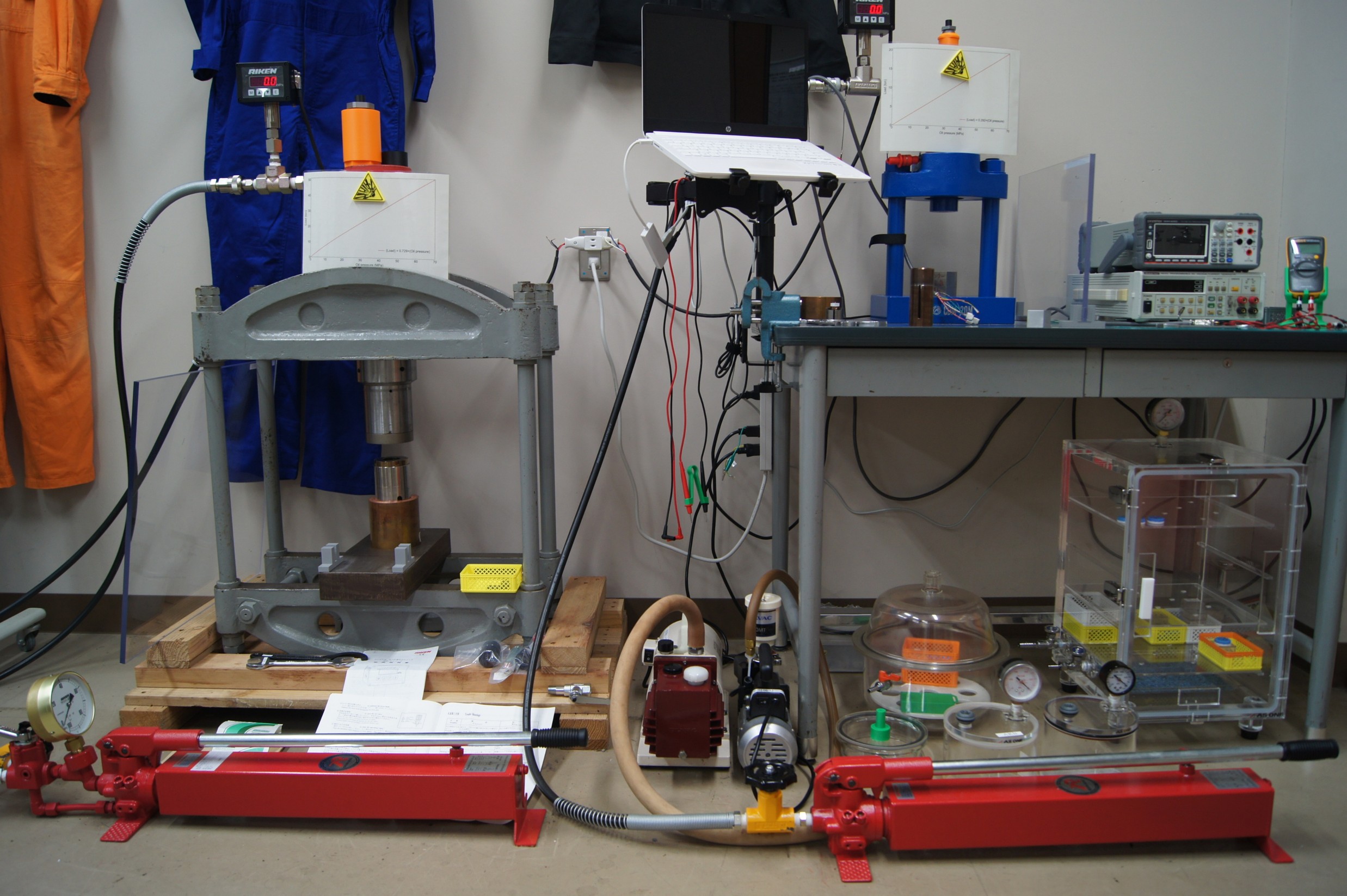
Hydraulic presses capable of applying maximum loads of 200 kN (~20 tons) and 500 kN (~50 tons). Used for pressurizing indenter, piston-cylinder, and opposed anvil pressure cells.
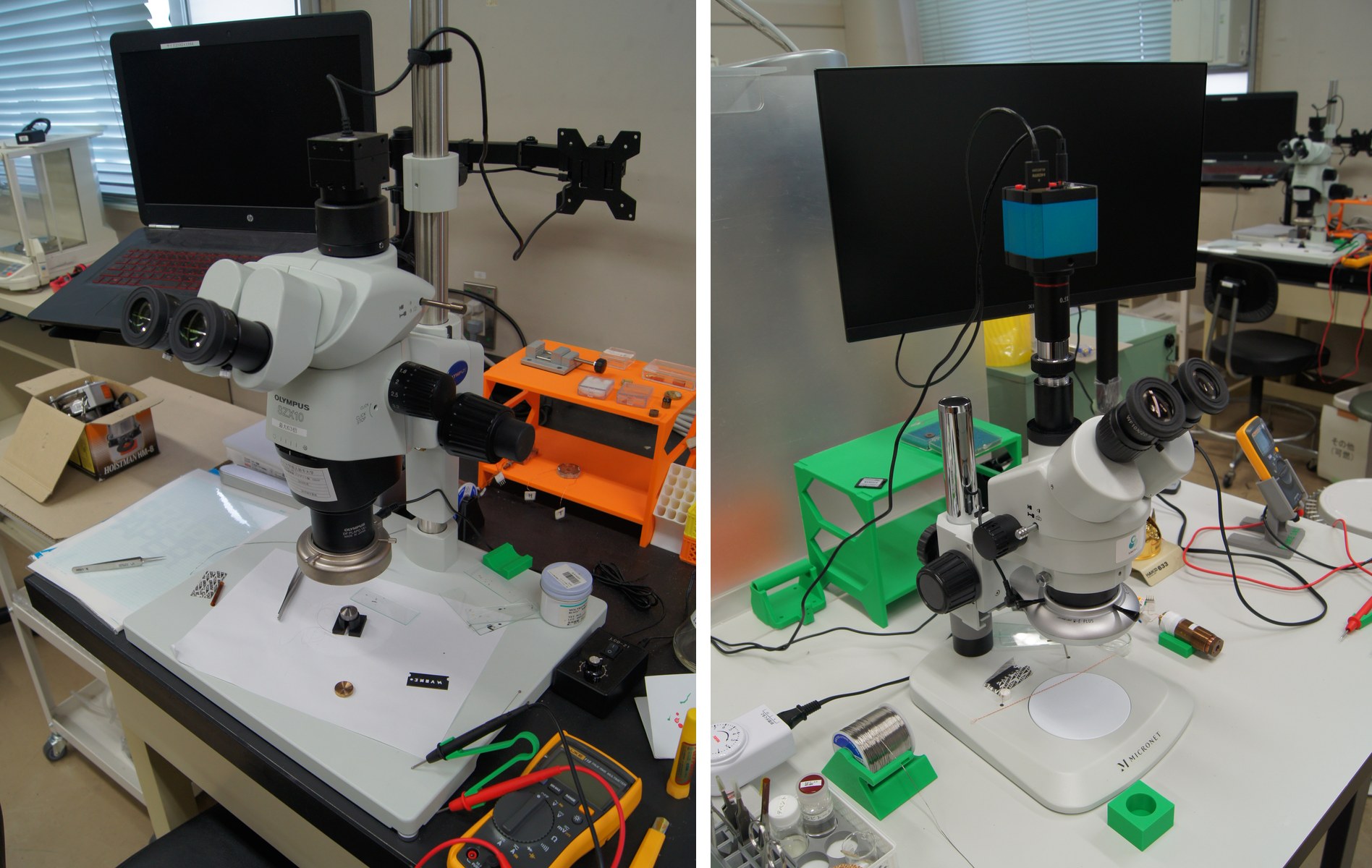
Stereomicroscopes for magnified observation of samples. Used for detailed sample setup work. Real-time observation on a PC screen, shape measurement, and image saving are possible via USB digital cameras.
Tabletop machine tools capable of simple metal machining. Used for making pressure cell parts and custom measurement devices.
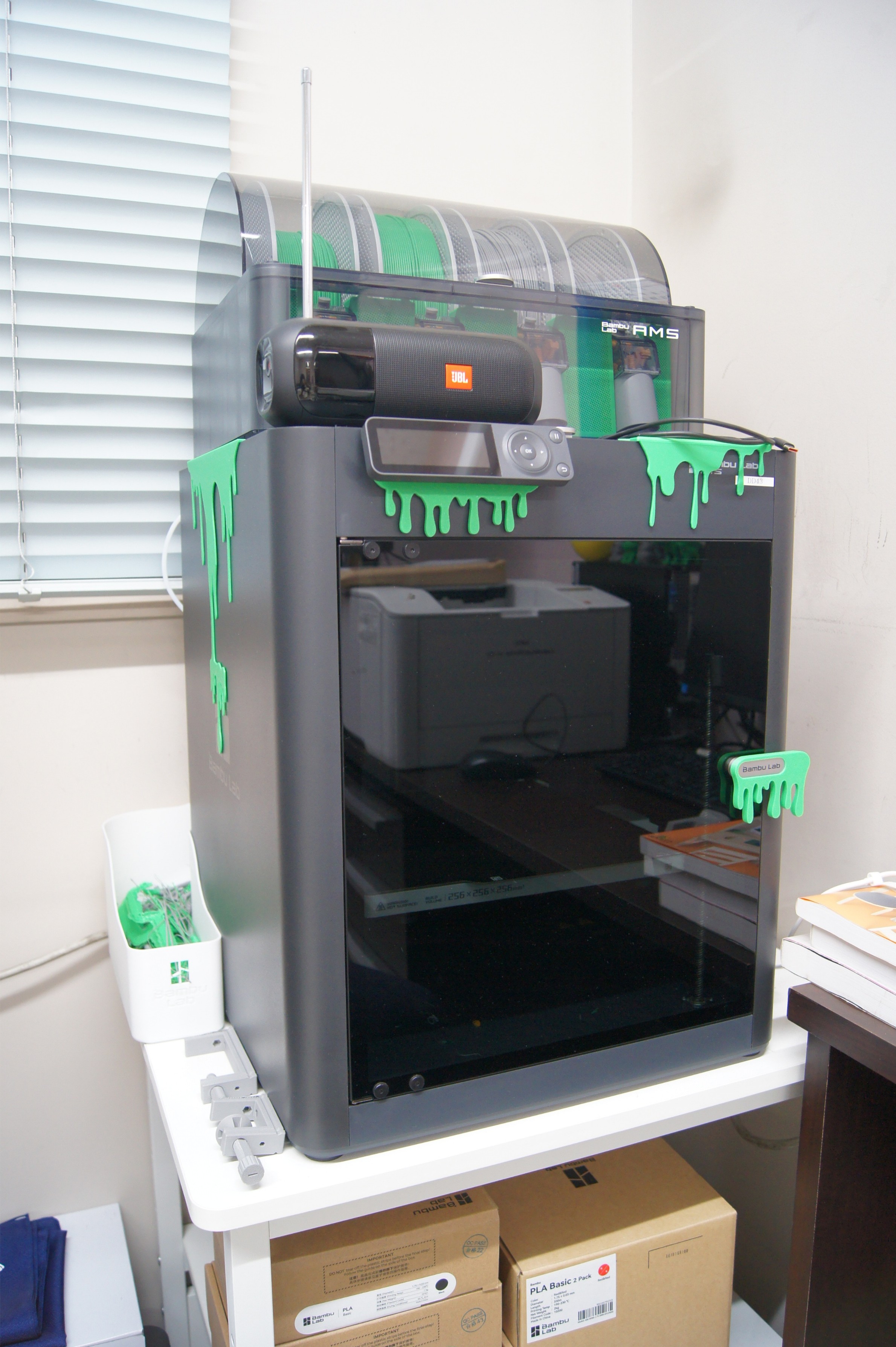
A fused deposition modeling (FDM) 3D printer. Used for manufacturing prototypes and resin parts.
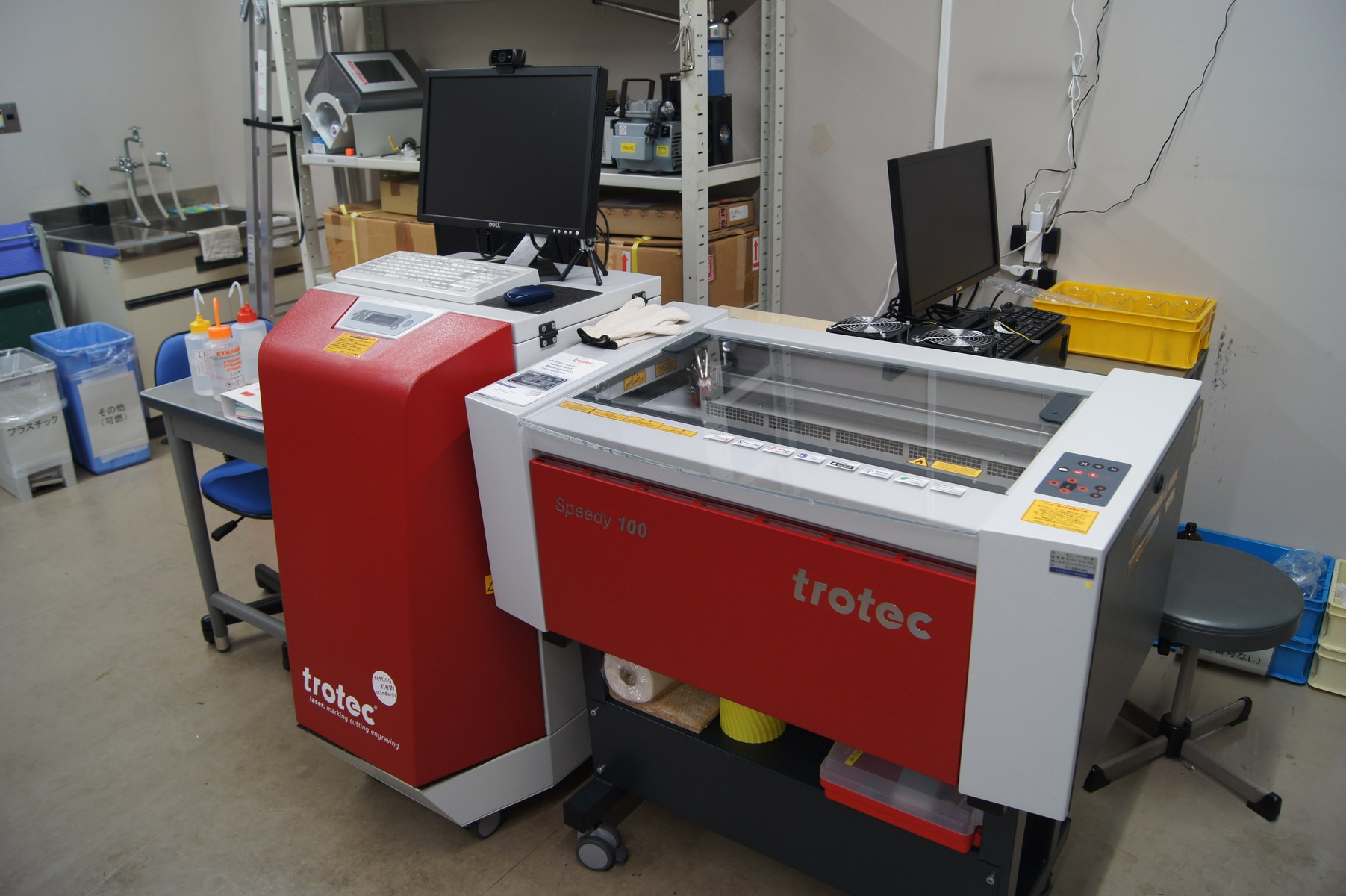
Enables cutting and engraving with a CO2 laser.